The Guide
Everything you need for your first month here. Checked in 2026 by someone who lives in the city, not copied from a blog post from three years ago.

$9
One payment. Free updates for a year.
Get the guideInstant download, plus the online version we keep current and email you about, and an invite to our WhatsApp community.
What it saves you
The visa fee
The government charges 25 USD for a 90 day e-visa. Agencies and lookalike websites charge 70 to 100 for the same document.
Saves you 45 to 75 USD
The rent gap
The same apartment costs about 10 million dong a month if you walk in and ask, and about 15 million through an agent.
Saves you around 190 USD a month
The cash machine
One bank still charges foreign cards nothing. Another one, which every older guide still recommends, started charging 3.3 percent in June 2025.
Saves you on every withdrawal
The licence
Most foreigners riding a motorbike here are not legally licensed, and do not know this cancels their travel insurance.
Could save you tens of thousands
Every fact carries the date it was checked. If we could not verify something, we left it out.
What is inside
Before you fly, the day you land, your first week, your first month. Read it front to back and you are never lost.
Visas, what they really cost, and when to come.
Airport to bed: transport, a phone number, and your first cash.
The one street rule, how to find a place without paying the foreigner price, and what it really costs.
What a month really costs, getting cash, and the bank account nobody thinks they can open.
The licence trap that cancels your insurance, and what it costs to rent.
The city has thousands of places. These are the ones worth your first month.
Emergency numbers, the police registration nobody tells you about, the sea, and the road.
What a doctor costs, how to talk to one, and the four questions to ask an insurer.
The rules that changed, what overstaying really costs now, and the three ways to reset.
Tet, the rainy months, and the weeks that catch people out.
Getting paid, home internet, and the 183 day rule nobody explains.
Fifteen words that change how people treat you, and the one idea behind all the manners.
The page that decides whether someone stays or books a flight home.
The short version, from someone who has watched people arrive for years.
Read a chapter first
Not a preview. The full chapter, exactly as it appears in the guide. If it is useful, the other 13 are the same.
Passports from most of Europe, the UK, Japan, South Korea, Russia and Belarus get 45 days in Vietnam with no visa at all. You just turn up. Thirty-eight countries are on this list, and Switzerland, Poland and the Czech Republic were added recently.
Your passport needs at least two blank pages.
Checked 2026-08-02
If your country is not on that list, or you want to stay longer than 45 days, you need an e-visa.
| What you get | Official price |
|---|---|
| Single entry, up to 90 days | 25 USD |
| Multiple entry, up to 90 days | 50 USD |
It usually takes about three working days.
Checked 2026-08-02
Read those numbers again, because this is where people lose money. You will see agencies and travel sites charging 70, 80, even 100 dollars for the same document. They are adding their own fee on top of the government's 25 dollars and hoping you do not know.
Apply here and nowhere else
evisa.gov.vn
Saves you: Also thithucdientu.gov.vn. Both are the real government site.
If a site looks glossier than that, has a live chat box, and asks for more than 25 dollars, it is a middleman.
Single or multiple entry? If you do not plan to leave Vietnam during your stay, single entry is fine and saves you 25 dollars. If you want a weekend in Thailand or Laos, pay for multiple.
Count days, not months. Ninety days is not the same as three months.
Usually nobody asks. When it does come up it is at the airport you are leaving from, at the airline desk, not at Vietnamese immigration.
If you are flying one way and want to be safe, book a fully refundable ticket out and cancel it once you have landed. You do not need proof of onward travel to apply for the visa itself.
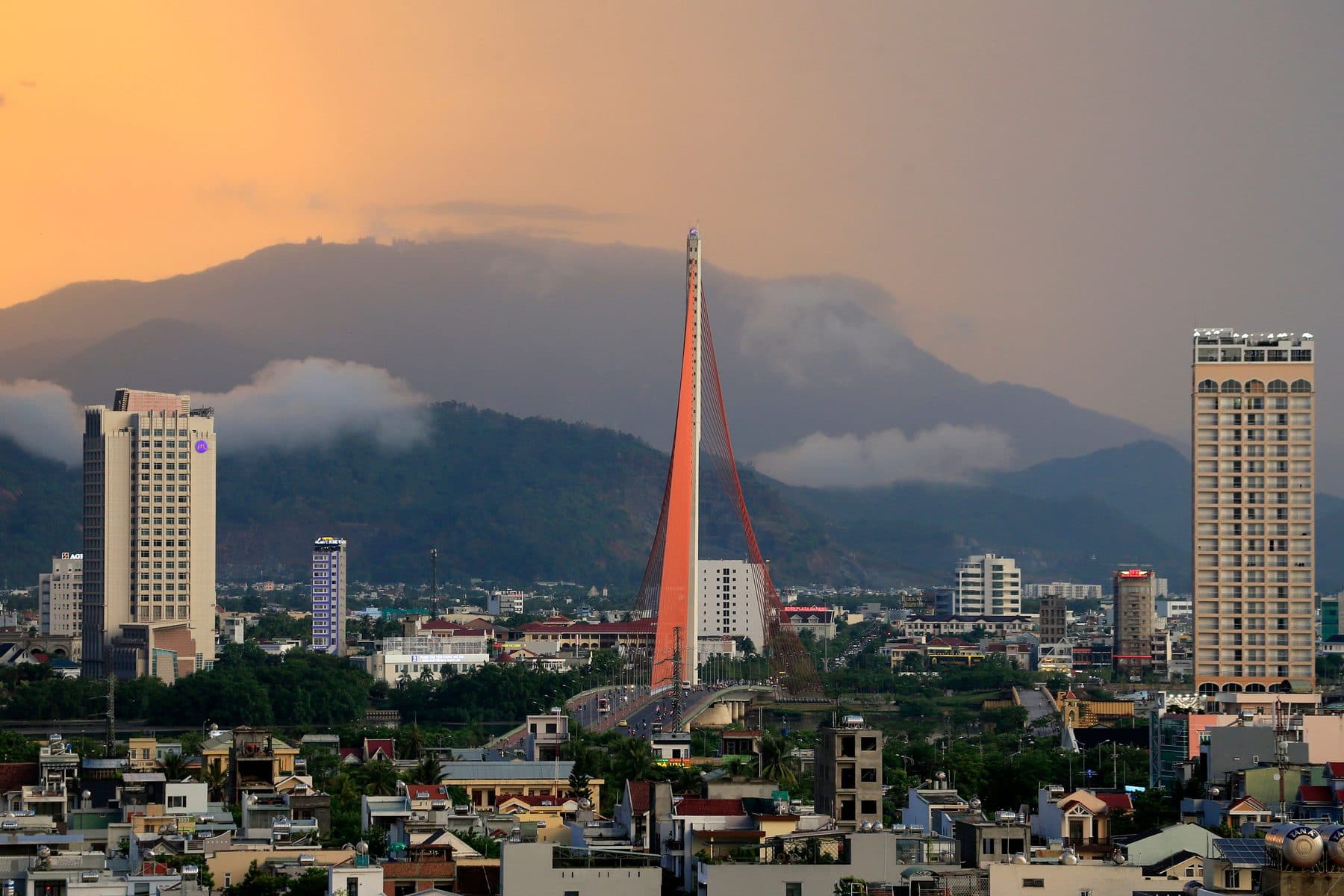
Da Nang has a wet season, roughly late August through November. On paper October is the wettest month. Ask people who live here and many will say November is the one that drags on.
You will find dramatic photographs online of central Vietnam under water. Most of those are Hoi An, not Da Nang. Hoi An sits low on a river and floods properly. Da Nang gets a lot of rain and some low streets take water for a while. Some places close. Most do not. Life carries on.
So do not plan your year around avoiding this. And do not cancel a November trip over a photo of a flooded street in a different town.
Checked 2026-08-02
What you get
A proper PDF you can read on a plane, at the airport, or anywhere with no signal.
A private link that stays up to date all year. When something important changes, a price, a rule, a place that closed, we update it and email you so you actually know.
An invite to our WhatsApp group, full of people who already live here and remember arriving.
Before you buy
No. It is for people coming to stay a while: a month, a season, or for good. If you are here for a five day holiday, most of it will not apply to you.
Every fact in the guide has the date it was checked printed next to it. Anything we could not verify was left out rather than guessed at.
That is what the online version is for. You get a private link we keep updating for a year, so you always have the current numbers rather than the ones from the day you bought it. And when something important changes, we email you about it, so you do not have to remember to check.
The guide itself is in English for now, since it is written for people arriving from abroad. A Vietnamese edition is coming.
Nine dollars. The visa chapter alone saves you more than that.
Get the guide